


Health


Share
Published 10:59 26 Aug 2025 BST

As children return to school, epidermolysis bullosa campaigner Claudia Scanlon is reminding people to think of pupils who may also suffer from epidermolysis bullosa.
Claudia said she never wants to see another child battle the same loneliness and isolation she did.
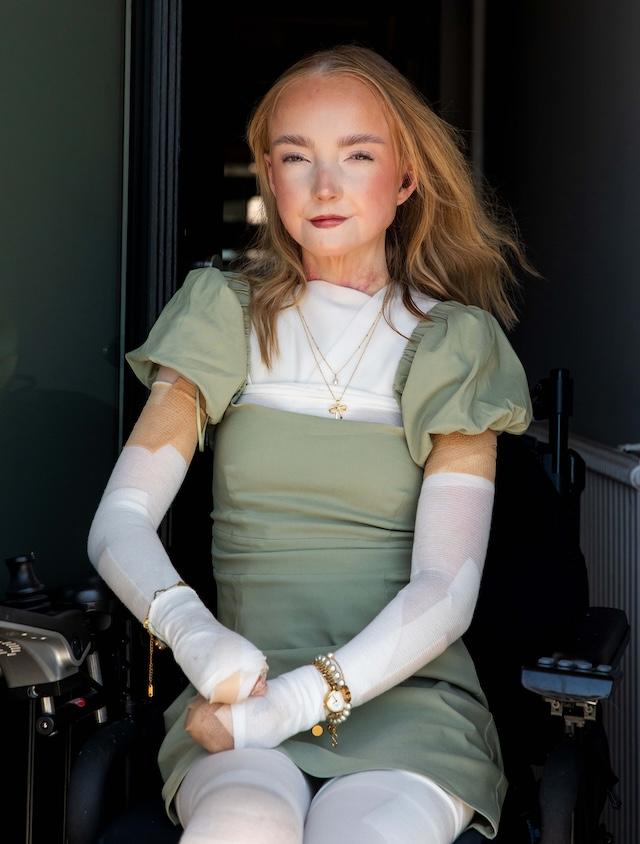
Claudia Scanlon, from Terenure in Dublin, has a severe form of epidermolysis bullosa (EB), the genetic illness that causes the skin to blister at the slightest touch.
Now the make-up artist is urging the public to help a charity’s vital work, ensuring that other children battling it have normal childhoods.
"I don’t want any child living with EB to experience the loneliness and isolation I did. Secondary school was a particularly tough time because, like most teenagers, all I wanted to do was fit in.

“The other kids didn’t understand my condition, and I spent most lunchtimes alone or with my SNA," she shared.
"Thankfully, schoolchildren with EB nowadays have more support. Debra (the national charity supporting those with EB) proactively works with the children to provide books and other resources to help their classmates understand the condition."
80% of Claudia's body is covered in open wounds, and she endures excruciating daily bandaging sessions.
Claudia said living with EB is an uphill battle every day.
"Just doing the ordinary things others may take for granted - like getting out of bed, leaving the house, or travelling to work - takes so much energy and determination. I’m sometimes exhausted before I’ve even left home."
"The curious side glances, the hushed conversations, or the horrible silence that falls over a room when you enter.
"I’m not sure how I would have coped without the emotional support from the Debra Family Support Team and the psychological support and counselling I received through them."
Claudia is urging the public to support the vital work that the charity Debra conducts.
Claudia highlighted that donations contribute to vital scientific research. This research helps to produce and improve treatment and progress towards a cure.
“People with my type of EB are seven times more likely than the average person to be diagnosed with skin cancer,” she said.
“At just 13, I had my first biopsy. Now that I’m 21, I know it has to be a regular thing.
“I have hope for a brighter future - every scientific breakthrough, every new treatment, and every new drug offers a glimpse of a better life."
Claudia said her greatest wish is for a cure for EB so people don't have to suffer anymore.
You can support Claudia and Debra's work here.
Explore more on these topics:

Health

Health

Health

Health

Health

Health


